How to choose press brake tooling depends on the sheet material, thickness, bend angle, inside radius, flange length, press brake clamping system and production volume. The right punch and die combination helps improve bending accuracy, reduce tool marks, control tonnage and make sheet metal production more stable.
Quick Answer
To choose the right press brake tooling, first confirm the tooling system, then check sheet thickness, material type, bend angle, inside radius, minimum flange length and press brake tonnage. For common air bending, choose a suitable punch shape and V-die opening. For deep boxes, narrow flanges, large-radius bends or special profiles, custom press brake tooling may be required.
Press Brake Tooling Selection Checklist
| Check Item | Why It Matters | What to Confirm |
|---|---|---|
| Tooling system | The tool must fit the machine clamp | European, Amada, Trumpf, Wila, LVD or American style |
| Material thickness | Affects V opening and tonnage | Sheet thickness and bend length |
| Material type | Different materials bend differently | Mild steel, stainless steel, aluminum or high-strength steel |
| Bend radius | Controls part shape and cracking risk | Required inside radius from the drawing |
| Flange length | Short flanges need careful die selection | Minimum flange length and clearance |
| Production volume | Determines standard or custom tooling | Prototype, small batch or repeat production |
Confirm Your Press Brake Tooling System
The first step is to confirm the press brake tooling system. Common styles include European precision style, Amada style, LVD style, Trumpf style, Wila style and American style tooling. A punch or die with the wrong shank, height or clamping interface may not fit the machine safely.
If your machine uses European style tooling, you can review our European precision style press brake tooling products.
Check Material Type and Sheet Thickness
Material thickness is one of the most important factors when choosing press brake tooling. It affects the V-die opening, required bending force, inside radius and risk of tool overload. Material type also matters because stainless steel, aluminum and high-strength steel have different springback and forming behavior.
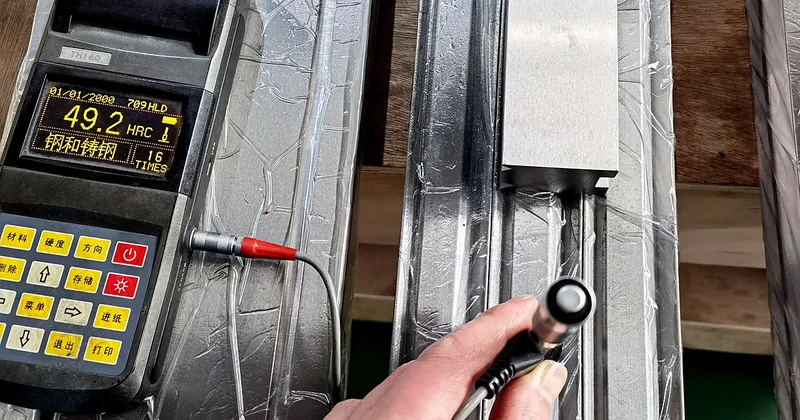
For general sheet metal bending, a standard punch and V-die are often enough. For harder materials or thick plates, the tooling should be checked more carefully for strength, hardness and load capacity.
Select the Correct V-Die Opening
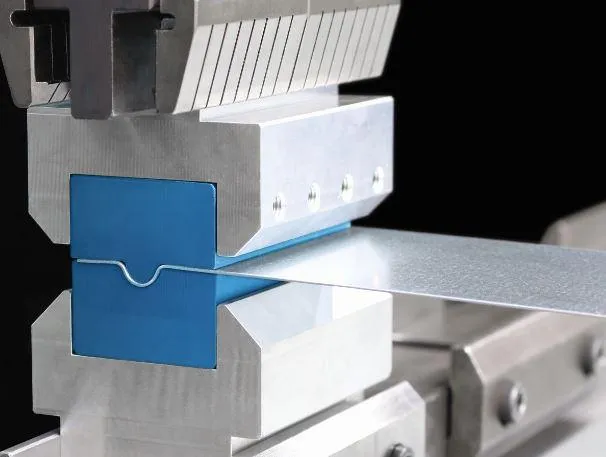
The V-die opening affects bend radius, tonnage and the minimum flange length. A common starting point for air bending is to choose a V opening around 6 to 10 times the material thickness, depending on the material and bending requirement.
If the V opening is too small, the bending force can become too high and the part may show stronger tool marks. If the V opening is too large, the inside radius becomes larger and short flanges may be difficult to bend accurately. For more detail, read our guide about V-die opening.
V-Die Opening Reference Table
| Material Thickness | Common V Opening | Typical Use |
|---|---|---|
| Thin sheet | About 6 x thickness | Small bends and shorter flanges |
| Medium sheet | About 8 x thickness | General air bending |
| Thick plate | About 10 x thickness or more | Lower tonnage and reduced tool stress |
Choose the Right Punch Shape
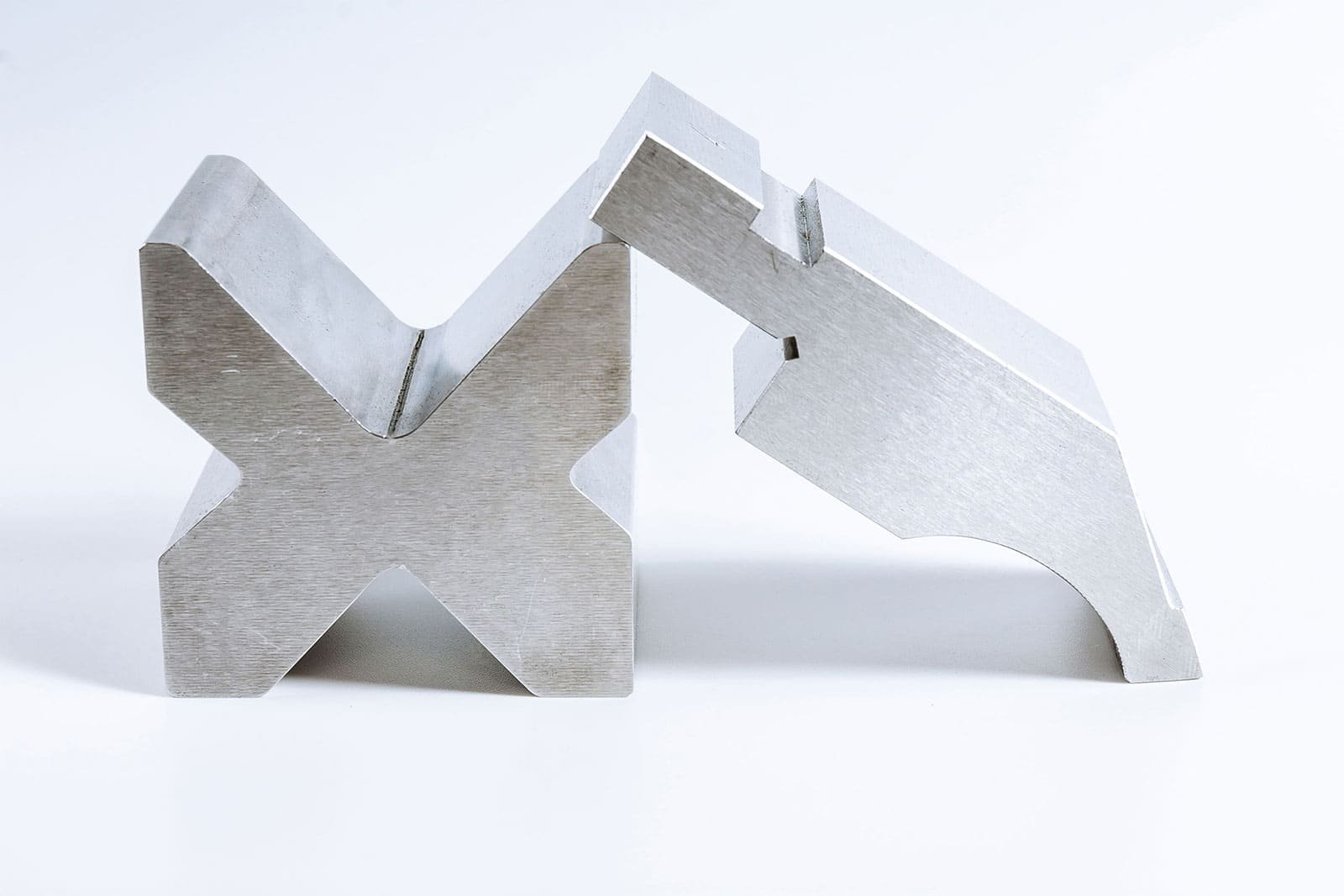
Different punch shapes solve different bending problems. A standard punch is suitable for common parts. A gooseneck punch provides extra clearance for boxes and return flanges. An acute punch helps form smaller angles, while a radius punch is used when the part requires a larger inside radius or smoother bend surface.
For a complete overview, see our article about press brake tooling types and customization.
Confirm Bend Radius and Minimum Flange Length
The part drawing should show the required inside radius and flange length. These two values must be checked before choosing the punch and die. If the flange is too short for the selected V opening, the part may slip into the die or fail to form accurately.
When the drawing requires a very small radius, a narrow die opening may be needed, but the increased tonnage must be checked. When the drawing requires a larger radius, a radius punch or special die may be a better choice.
Check Press Brake Tonnage and Tool Load
Every press brake and tooling set has a safe load limit. Before bending thick material or long parts, confirm that the machine tonnage and tool load capacity are suitable. Overloading the punch or die can damage the tooling, reduce accuracy or create safety risks.
For production parts, it is better to check tooling load before ordering instead of adjusting after problems appear during bending.
Choose Standard or Custom Press Brake Tooling
Standard press brake tooling is the best choice for common bends, regular angles and repeat production with normal materials. It is easier to replace, easier to set up and usually more cost-effective.
Custom press brake tooling is recommended when standard tools cannot meet the part geometry, clearance, bend radius, surface requirement or production speed. Examples include deep channels, offset bends, narrow return flanges, large-radius bends, non-marking bending and special profiles.
Common Mistakes When Choosing Press Brake Tooling
- Choosing tooling before confirming the press brake clamping system
- Selecting a V opening without checking minimum flange length
- Ignoring material springback and tensile strength
- Using a standard punch when the part needs extra clearance
- Forgetting to check machine tonnage and tooling load limit
- Choosing custom tooling without providing a complete part drawing
Work With a Press Brake Tooling Manufacturer
A tooling manufacturer can help check the drawing, material, thickness, bend angle, inside radius, machine model and production quantity before recommending a punch and die. This helps avoid wrong tooling selection and reduces trial-and-error during production.
Anhui Tooling manufactures press brake tooling, including standard punches, dies, segmented tooling, die holders and custom tooling made from drawings. For metal-specific solutions, you can also read about targeted press brake tooling for different metal bending.
FAQ
How do I choose the right press brake tooling?
Choose press brake tooling by checking the tooling system, material thickness, material type, bend angle, inside radius, flange length, tonnage and production volume.
What is the common rule for press brake V-die opening?
For air bending, a common starting point is to choose a V opening around 6 to 10 times the material thickness, depending on material and bend requirements.
When should I use custom press brake tooling?
Use custom press brake tooling when standard tools cannot meet special profiles, deep channels, narrow flanges, large-radius bends, non-marking requirements or repeated production needs.
What information should I send to a tooling manufacturer?
Send the part drawing, material type, sheet thickness, bend angle, inside radius, flange length, press brake model and expected production quantity.
Can one press brake tooling set handle all bending jobs?
No. One tooling set can cover many common parts, but special profiles, thick materials, short flanges or strict surface requirements may need different or custom tooling.